
No physical contact
The measurement is made at a distance from the energised installation, which is safer.

Thermography
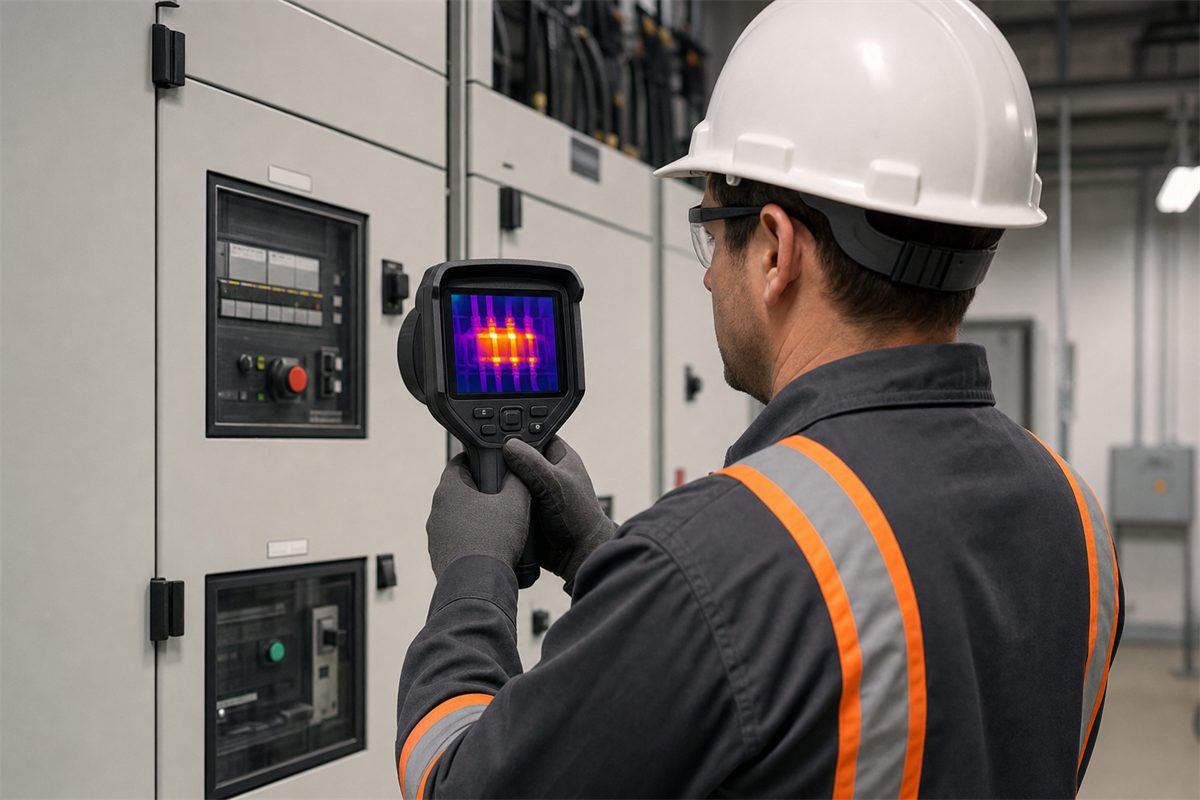
Infrared inspection that finds hot spots in connections, switchboards and equipment while the installation is running, with no contact and no production stop.
How it works
Thermography is a non-destructive technique that uses infrared radiation to measure temperatures and compare heating patterns in a component, a piece of equipment or a process. A point that is hotter than its neighbours usually indicates a loose connection, a worn contact, an overload or a phase imbalance.
The measurement is made from a distance, safely, with the equipment in full operation. Maintenance can then plan the intervention before the defect becomes a failure, and the shutdown becomes a scheduled one.
Benefits
The measurement is made at a distance from the energised installation, which is safer.
Equipment is checked while in full operation.
Large areas inspected in a short time, with quick results.
Field data guide the intervention before the failure and avoid losses from stoppages.
Where to apply it
The inspection covers the points where abnormal heating comes before a failure.
Frequently asked questions
No. The inspection needs the installation energised and under load, because it is the current flow that reveals abnormal heating. That is why it does not interfere with production.
Mainly loose or oxidised connections, worn contacts in switches and circuit breakers, overloaded circuits and phase imbalance. In all these cases the faulty point heats up more than the neighbouring components.
It depends on how critical the installation is and on the operating conditions. It is common to inspect at least once a year and to repeat the inspection after interventions or load increases. In Brazil, ABNT covers the subject in standards NBR 15572, on the inspection of electrical and mechanical equipment, and NBR 15763, on the criteria for inspection intervals in electrical power systems.
Each anomaly is recorded with its thermal image, the location of the point and the temperature measured, so that maintenance can set priorities and schedule the correction. Power also carries out the repair, in a planned shutdown or as an emergency.
Contact
Tell us which equipment is involved and how urgent it is. For quotes and site visits, talk to our sales team. If equipment has failed, call the emergency line directly.
24-hour emergency line · +55 51 98413-9330